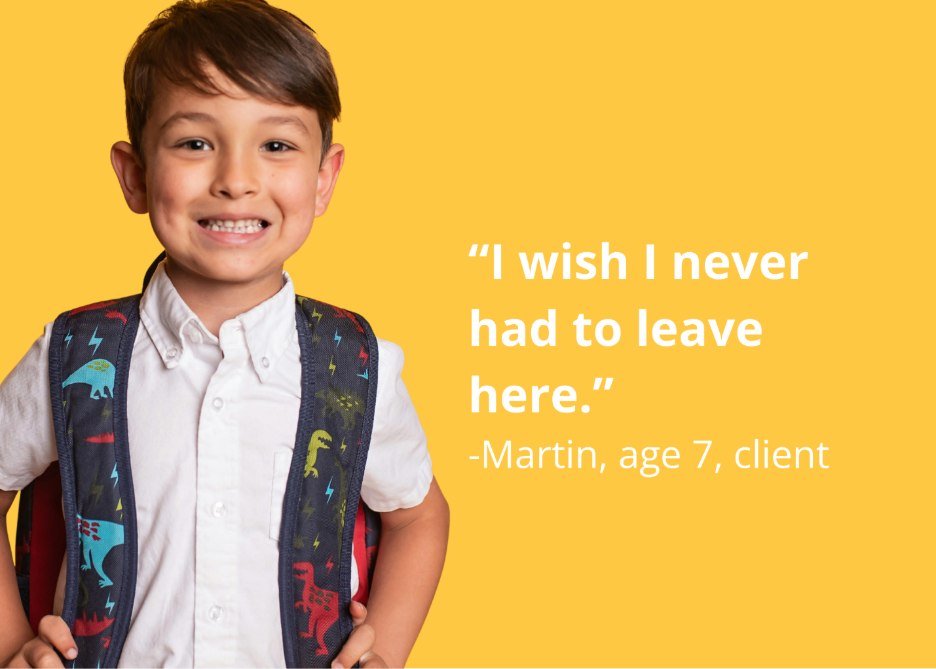
Martin, age 7, started coming to Youth Services through the Study Buddies Program, visiting the agency once a week for homework help, a hot meal, and connection to a community volunteer. He was reserved and shy, often sitting in silence between his few word answers to questions posed by his tutor.
The team recognized quickly that Martin struggled socially, and that isolation was impacting his mental health. After dinner and his homework were done, Martin and a Youth Services therapist decided to walk through the building to get away from the noise and activity of the gym. When Martin found the Lego room, his face lit up with excitement.
“Can I?” he asked.
“Of course!” the therapist replied, helping him take out a box of building blocks and figurines.
That first night, Martin built for only 10 minutes before it was time to go home, but the next week when he came to the building, he headed straight to the therapist and asked, “can we go downstairs?” He ate his dinner with speedy intention, completed his school tasks, and was ready with record speed to head to the basement. Once downstairs, he shared with the therapist that he loved building things as he assembled a tower and grabbed a dragon figurine that swirled around it. Alone with his thoughts, his imagination soared higher than the dragon and for the first time in months, a smile spread over his face. Martin shared that he didn’t have blocks at home – a one-bedroom apartment he shares with his 3 siblings and parents.
That week, as the Youth Services Team engaged in their clinical consultations, they discussed Martin’s case. Martin’s oldest sister, Alena, is 16 years old and takes care of her younger siblings while her parents work. She balances being a primary caregiver, translator, and a teenager daily. The team called Martin and Alena’s mother, who burst into tears that she knew her children were struggling. Martin was enrolled in a social skills group where he meets peers and practices playing, working, and engaging with others. Alena receives individual counseling every other week to provide an outlet for the stress she experiences. Their parents receive regular updates on their children and learn about other community resources through Alena’s therapist to ensure their needs are met.
As Study Buddies concluded and Martin packed his bag to catch the bus home, he said to his counselor, “I wish I never had to leave here” with joy and calm in his voice. His YS therapist replied with care, “we’re so glad you’re here too.”
Martin’s story is just one example of how early support can change a child’s trajectory. When children receive the right support at the right time, the impact extends far beyond one moment—strengthening families, schools, and entire communities.
Early access to mental health support changes children’s lives and strengthens the communities where they live.
In 2025, the World Health Organization made the case unmistakably clear: investing in adolescent mental health works. Every $1 invested returns $24 over a lifetime—through fewer mental health crises, stronger school success, better long-term health, and more stable futures for children and families.
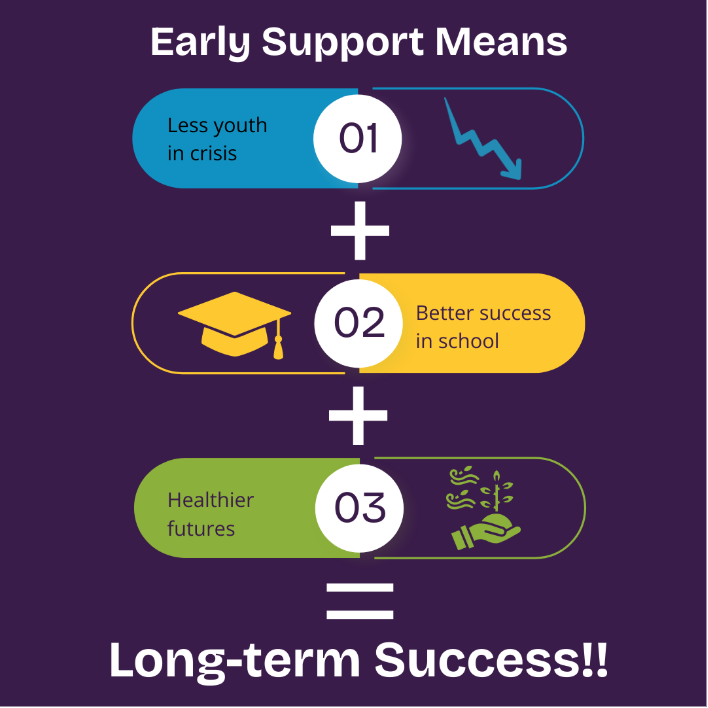
What makes the biggest difference?
- Reaching children early, before challenges become crises
- Supporting parents and caregivers—not just the child
- Providing care in familiar places like schools and community settings
- Staying consistent as children grow and their needs change
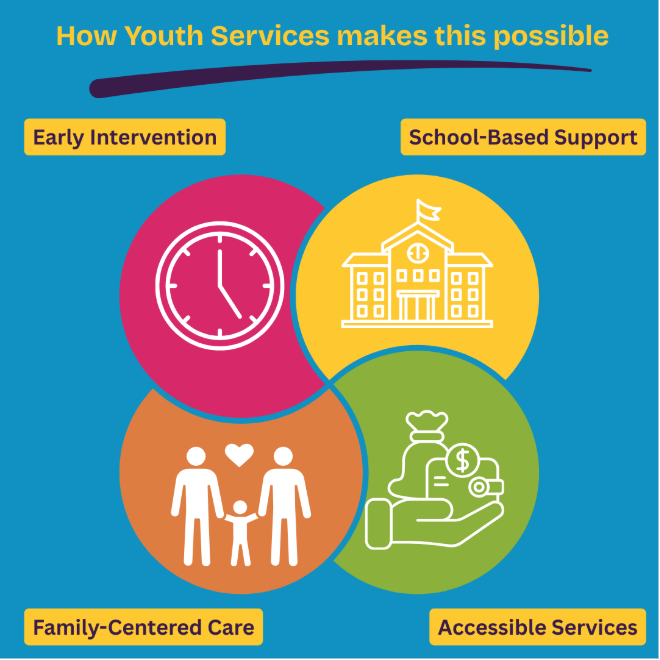
This is how Youth Services shows up
- This reflects how Youth Services works in our community, in ways that set us apart.
- We reach children early through after-school and academic support programs that build emotional regulation, coping skills, and healthy relationships.
- We support families directly through programs like Caring Connections, strengthening the parent–child relationship and creating space for connection and growth.
- We partner with local schools to provide on-site counseling, group support, and crisis response—ensuring concerns are identified early and support is accessible when it’s needed most.
- Through a flexible care model, including insurance, private pay, and sliding-scale options, we ensure families never have to choose between mental health support and financial stability.
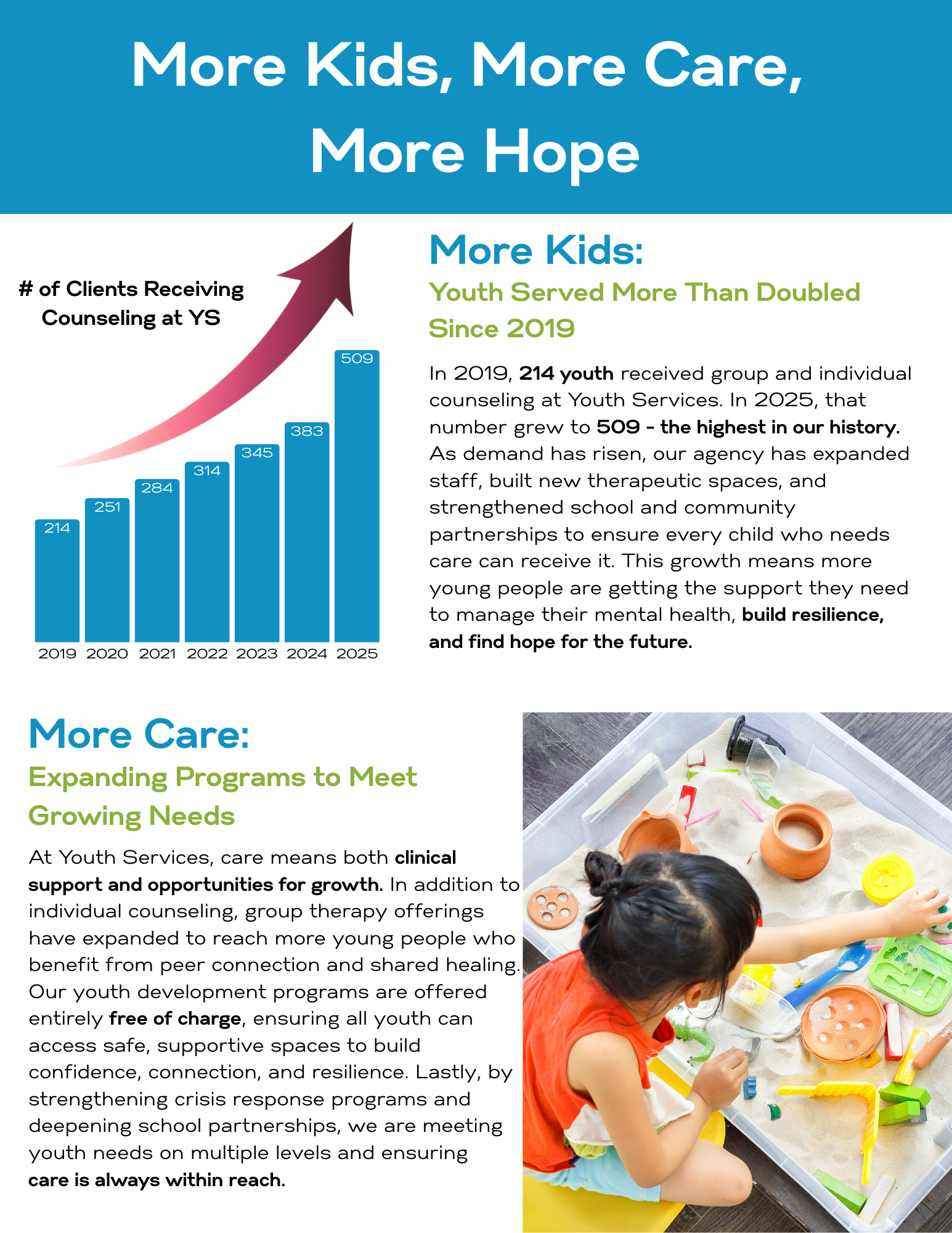
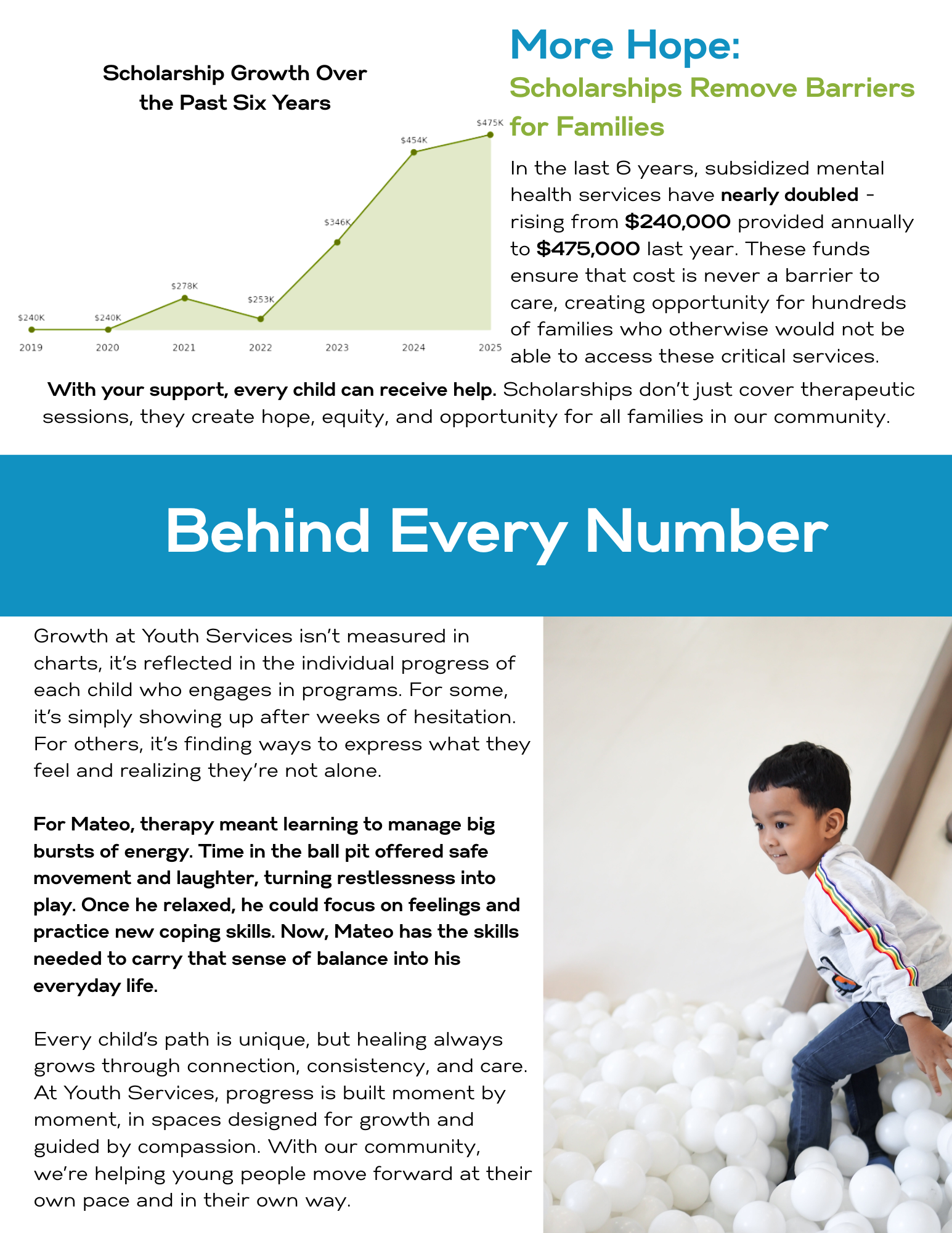
- Last year alone, Youth Services invested $475,000 in mental health scholarships, supporting 365 children and generating an estimated $11.4 million in long-term impact
When young people have consistent support, they build the skills that help them navigate challenges, strengthen relationships, and believe in their own potential.
Across Youth Services programming, youth are developing the emotional and social skills that help them thrive – both today and throughout their lives. Through counseling, mentoring, and youth development programs, young people gain confidence, develop meaningful connections, and learn healthy ways to manage their emotions.
These outcomes are what prevention looks like in action. When children build these skills early, they are better equipped to succeed in school, build healthy relationships with family and peers, and move forward with resilience.
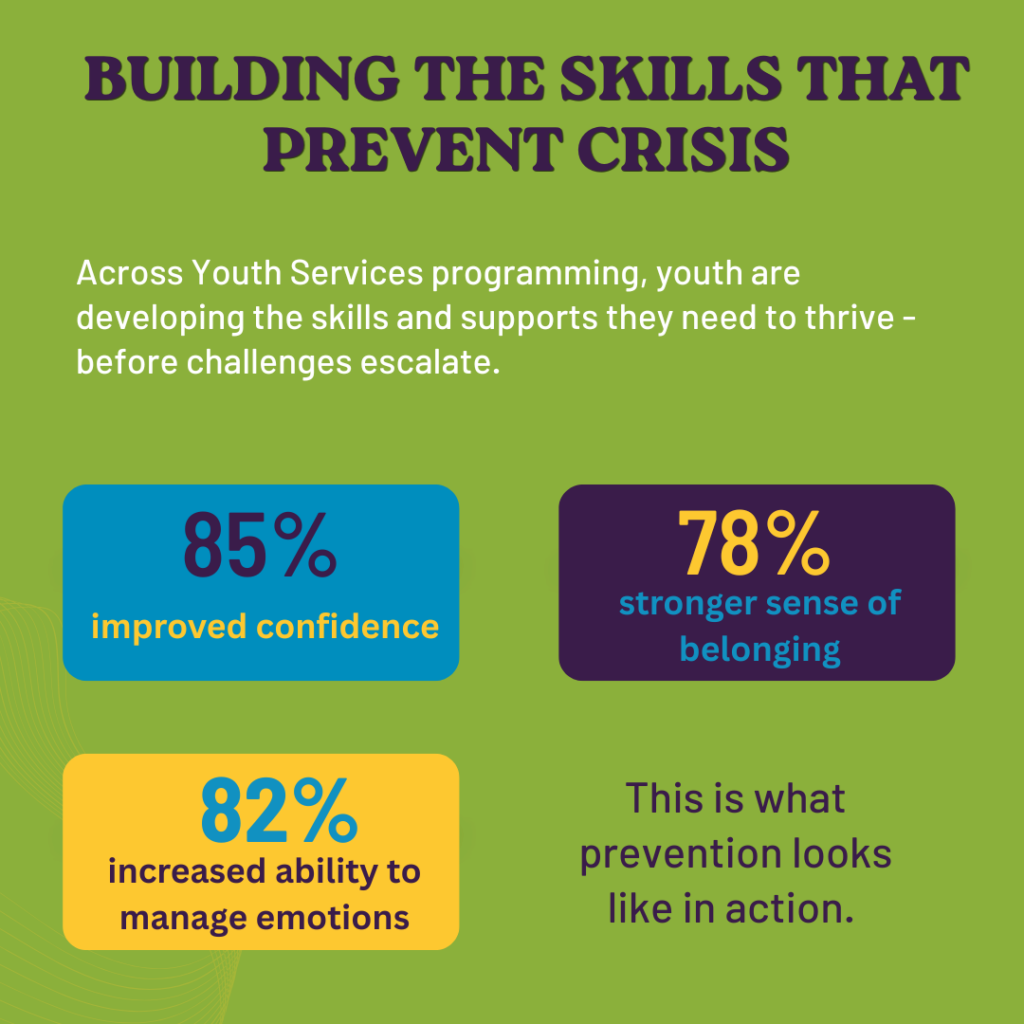
These outcomes reflect the impact of prevention in action. As more children and families seek support, Youth Services continues to grow to ensure every young person who needs help can access it.